Learning how to do push-ups properly is key not only to avoid injury, but to unlock real, visible results. If you’ve been wondering how to go from a few reps to mastering this exercise, or how to keep progressing if you’re already advanced, you’re in the right place.
In this article, we will explain step by step how to perfect your technique, adapt the exercise according to your level using the Bilbo Method Progression explained by its creator, Jesús Varela, and we will answer the most searched questions on Google about this classic and powerful exercise.
What are push-ups for? Far from being a simple exercise, push-ups are a fundamental compound movement that activates multiple muscle groups simultaneously, making them an incredibly efficient tool for your workout:
By incorporating them consistently and with the correct technique, you will improve your overall strength, muscular endurance and enviable body stability.
The best form will always be the one that suits your current level and goals. However, there is a common technical base that you must master to maximize effectiveness and minimize the risk of injury:
Powerful push: Climb by pushing up firmly with your arms, maintaining alignment and without arching your back.

Jesús Varela, creator of the Bilbo Method, explains how to progress in push-ups, especially useful if you are preparing for competitive exams or simply looking for a substantial improvement.
The Bilbo Method focuses on a first Set (Bilbo Set) carried almost to failure or failure, explosive and fast.
You have several ways to progress, which you can cycle to avoid stagnation and keep improving:
Bench press strength is going to bring about an improvement in push-ups, yes or yes. If you’re at a strong level, consider including the Bench press in your routine instead of obsessing only on push-ups. I, not specifically training pushups but with a strong Bench press, can perform 70-80 reps.
As you have seen with the Bilbo Method, it is not a daily magic number. It depends on your level and the progression system you follow. The guide is:
The crucial thing is to maintain good technique and progress in a structured and intelligent way.
Doing push-ups following a proper progression and frequency, as proposed by the Bilbo Method, can bring significant benefits:
However, keep in mind: It’s better to fall a tad short and keep improving than to overdo it and stagnate. If you don’t allow for adequate muscle recovery (rest) or don’t vary intensity and progression methods, you could stagnate. Introducing rest days and cycling variations of progression is essential to keep progressing.
There are several methods to improve strength:
If you want to see the technique visually, we recommend this complete video from our channel:
There you will learn the best ways to progress in your push-ups according to your level.
Push-ups are an incredibly effective exercise because they work a large number of muscles in a coordinated fashion. It doesn’t matter if you’re just starting out with wall push-ups or kneeling to reach those first 15 reps in your Bilbo Set, or if you’re already capable of doing dozens of strict push-ups and are looking for new challenges with weights or varied grips. There is always a version and progression for you.
The key is to adapt the exercise to your current capacity, maintain consistency, and use intelligent progression systems such as the Bilbo Method.
Remember the words of Jesús Varela: “Always write down the progressions, which is the way in which you will be able to measure your progress”.
At Bilbo Team, we help you take your results to the next level with personalized training and the expert advice you need, applying principles like the Bilbo Method to transform your physique and achieve your goals. Whether you want to optimize your pushup training or any other goal,
contact us!
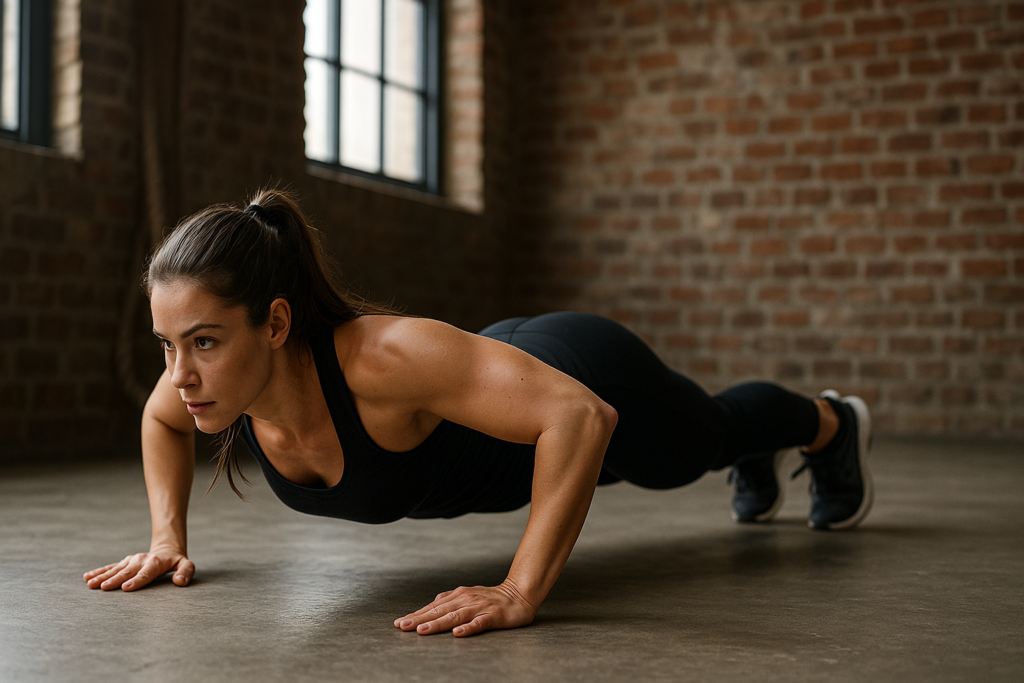

Expert in strength training and physical tests for civil service candidates. With over 30 years of experience and multiple national and European records, he shares his methods to improve strength, endurance, and performance safely.