Setting up a home gym is one of the most rewarding decisions if you’re passionate about strength training, but it’s also where most mistakes are made due to lack of planning. Whether it’s in a spare room, basement or garage, the heart of your training area will always be the same: the weight cage or power rack.
In my experience helping others set up their training spaces, I’ve seen how a good rack completely transforms an athlete’s mindset. It’s not just about having a place to rest the bar; it’s about the mental freedom it gives you to know that you can go for your maximum effort without fear. If you’re thinking about taking the plunge, in this guide we’re going to break down everything the store data sheets don’t usually tell you.
Unlike a conventional squat rack, a power cage is an enclosed structure that offers unmatched versatility. When I first started training at home, I realized that the main limitation was not my strength, but the fear of failing a squat or Bench press repetition alone.
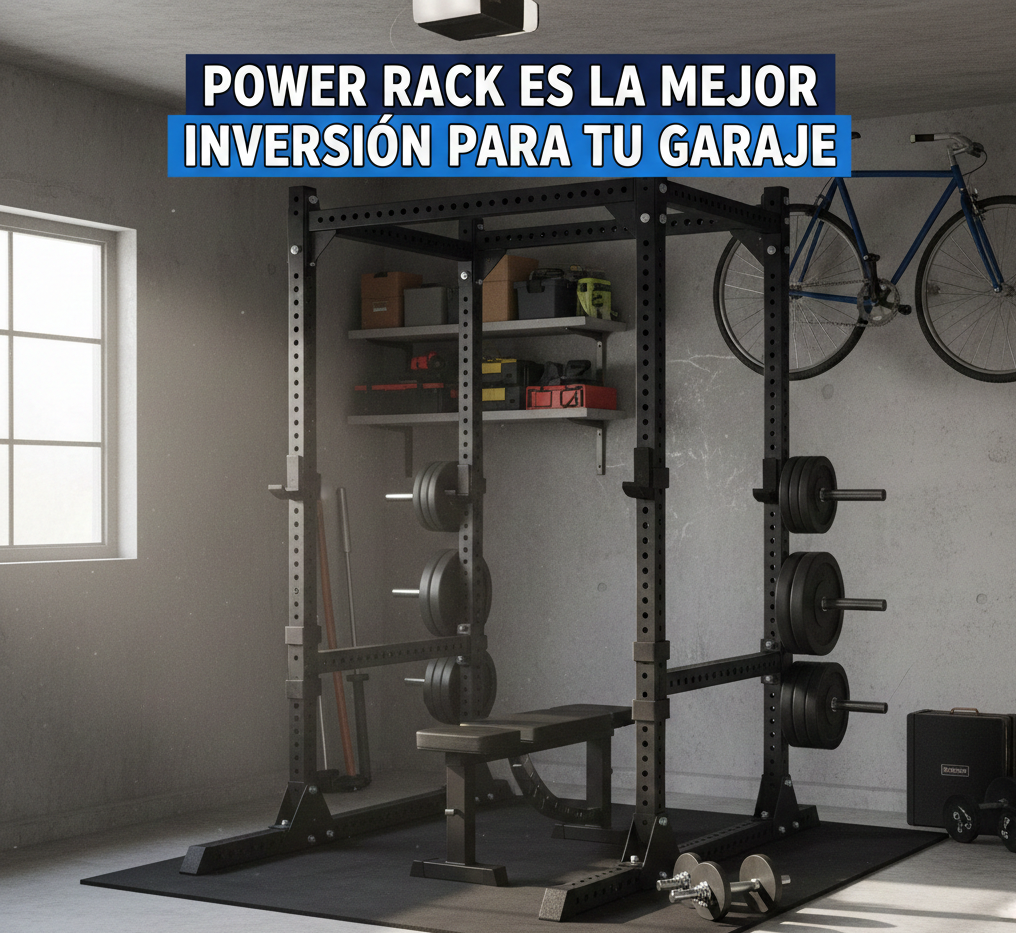
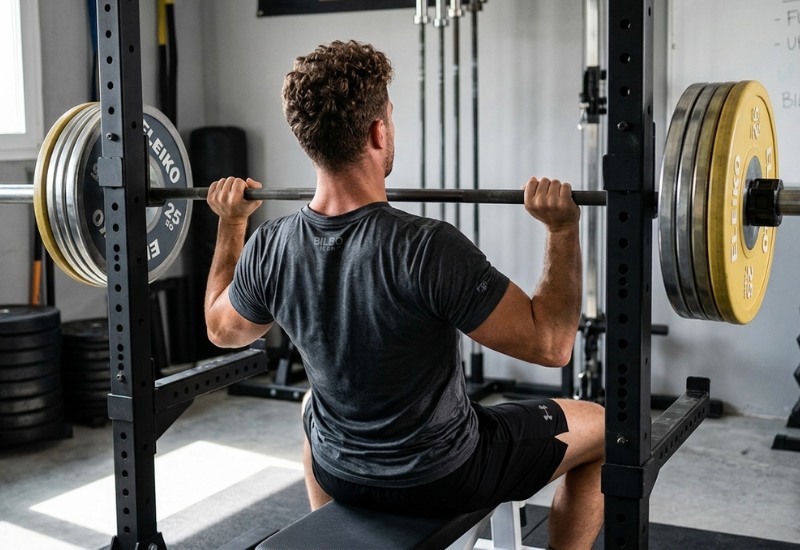
This is the greatest virtue of a rack. Thanks to the adjustable safety systems (either solid bars or nylon straps), you can train with a free bar and heavy weights with total peace of mind. In exercises such as the military pressbarbell rowing or the squatIf you reach muscle failure, the structure supports the weight for you.
When I first tried training inside a sturdy cage, my load progression skyrocketed; I simply lost my fear of getting “stuck” under the bar. It’s a perfect solution whether you’re a beginner or already moving serious pounds.
Not all racks are the same, and price is not always the only indicator of quality. There are construction details that will make the difference between an equipment that will last you a lifetime and one that vibrates every time you release the bar.
This is a point where many people try to cut corners and it’s a critical mistake. You’ll see basic racks that promise to hold 140 kg. That may seem sufficient if you’re lifting 80 kg now, but my advice is resounding: if you already work squats with more than 100 kg, choose a rack that holds at least 250 kg. Why? Because of inertia. It’s not the same depositing the bar gently as a dynamic failure where you drop the weight. A professional structure of 450 kg or more will give you stability that you’ll notice with every repetition. Don’t skimp on the steel; your safety and the durability of your equipment depend on it.
This is where most home gym users fail. We usually measure the width of the rack (which is usually around 120-140 cm) and think, “Perfect, it fits in this gap!”. But the real problem is not the cage, but the Olympic bar.
A standard Olympic bar measures between 220 cm. I have seen cases of people setting up their rack in a cramped basement and then not being able to load the discs because the bar hits the walls. Make sure you have at least a 50-60 cm clearance on each side of the structure to maneuver the discs comfortably. If space is very critical, measure three times before buying once.
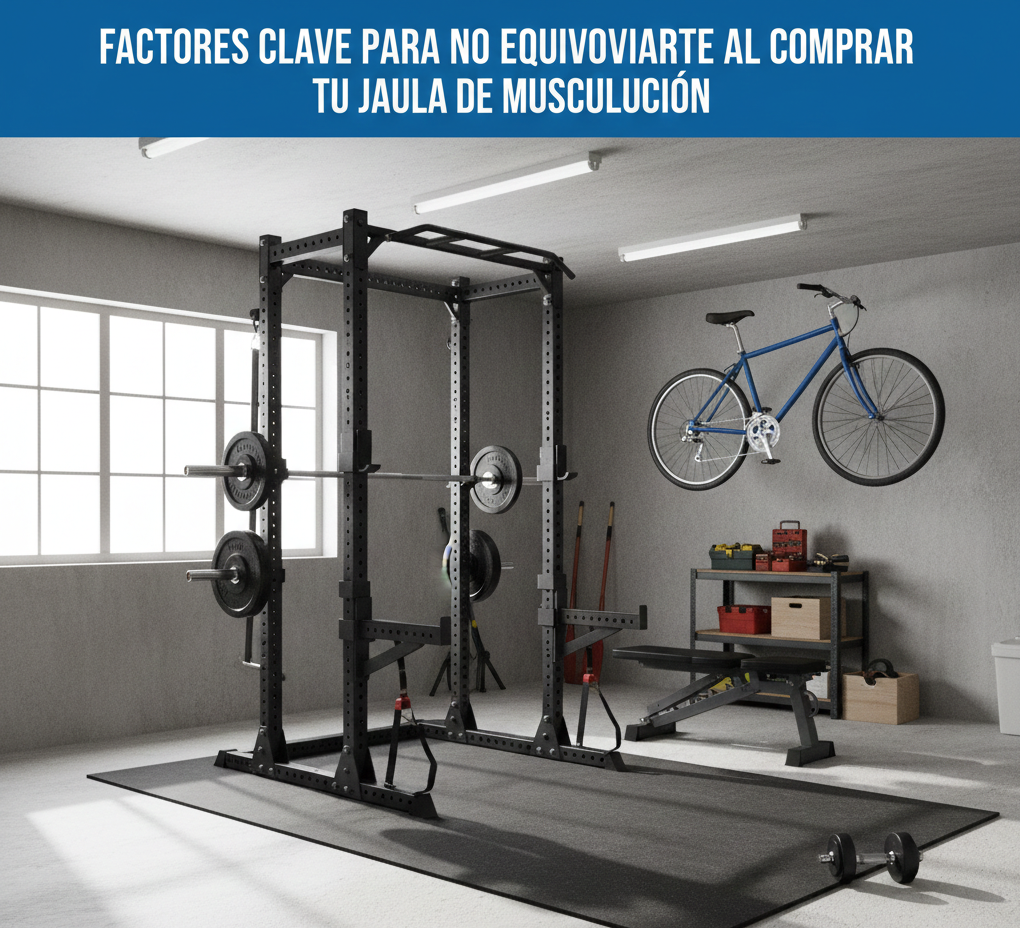
If you have a large garage, a full cage is unbeatable for stability and the ability to add internal accessories. However, if your gym is in a walk-through area or multi-purpose room, folding wall racks are an excellent option. Just make sure the wall is load-bearing; you wouldn’t want to rip out the brick on your first set of pull-ups.
The best thing about a good weight rack is that it is a modular system. My recommendation is to always look for one that includes an integrated pull-up bar. It’s much more stable and safer than any external accessory you can buy later. Plus, you can add:
I have analyzed dozens of models and, nowadays, brands like the ones you can find at FitnessDigital offer a quality-price ratio that is hard to beat. They work with all the fitness brands on the market, allowing you to compare everything from intermediate models to professional equipment.
| Rack Type | Recommended Capacity | Ideal Use |
| Basic / Initiation | 140 kg – 180 kg | General maintenance and fitness |
| Intermediate / Advanced | 200 kg – 300 kg | Powerlifting and strength progression |
| Professional | +450 kg | High performance training |
Here you can see a selection of weight training cages and racks with excellent value for money:
Selection of weightlifting cages at FitnessDigital at the best price
If you’ve decided to take the leap and build your own iron temple, I’ve got a little extra help for you. You can use the coupon code BILBOTEAM5 at FitnessDigital to get an additional discount on your purchase. The best thing is that this coupon is usually cumulative to the offers they already have on the web, so it is the best way to stretch your budget.
What about the weight bench?
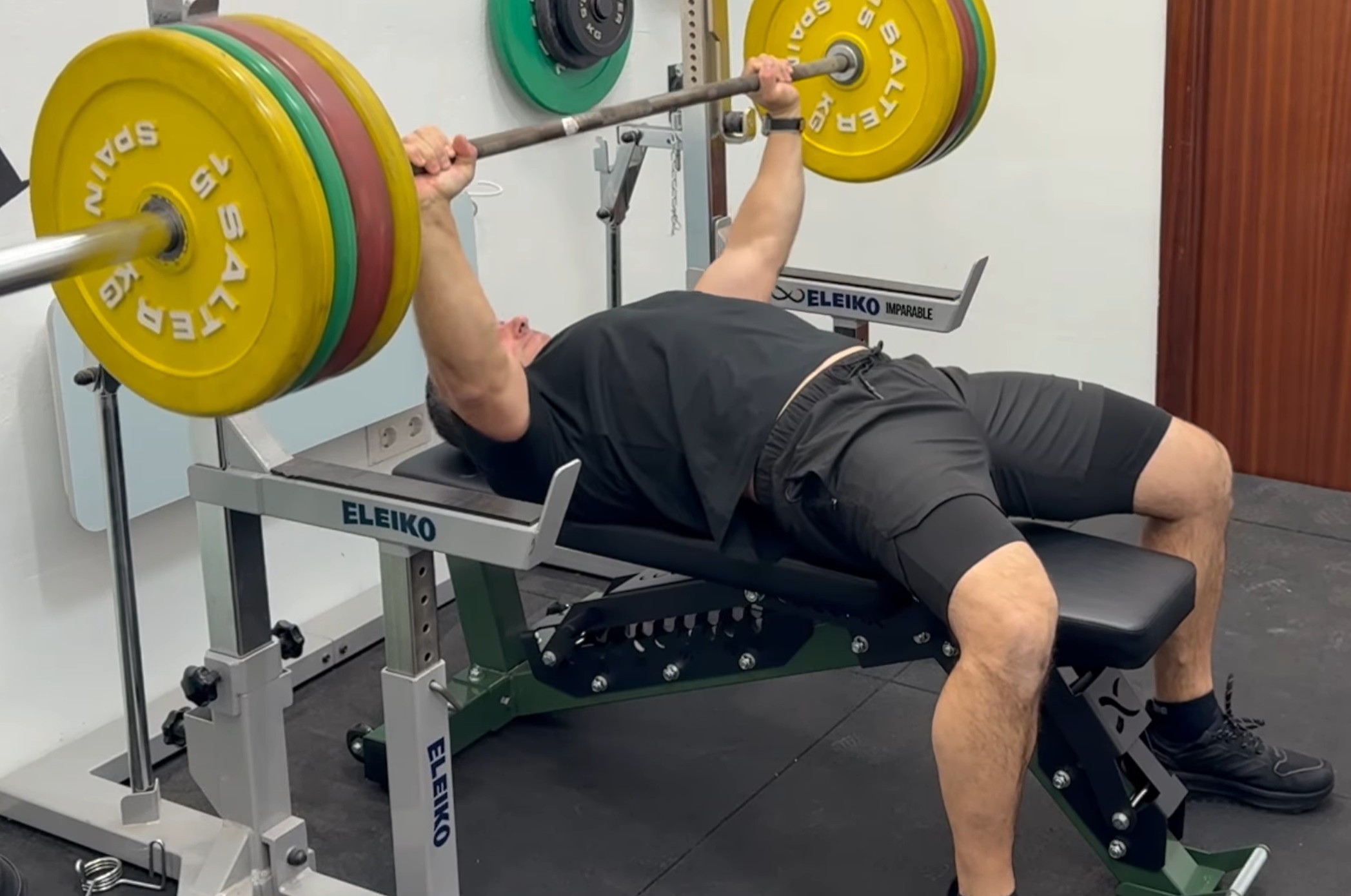
Remember that a cage is only half full throttle without a good bench. I recommend you look for one that is stable and adjustable so you can perform incline and decline presses inside the rack.
Investing in a home training cage is, in the long run, much cheaper than any gym membership and infinitely more efficient. If you prioritize safety (looking for that 250 kg margin), measure the space for your 220 cm bar well and take advantage of the customization options, you will have a gym for life.
Training in your own garage, at your own pace and without waiting for anyone to let go of the machine, is a luxury that a good rack makes possible. Give it a go!
1. Is it difficult to assemble a bodybuilding cage by oneself?
It is not difficult, but it is laborious.
2. Do I need to bolt the cage to the floor?
If the cage is heavy and you are going to do dynamic exercises (such as weighted pull-ups or kipping), it is highly recommended. If you don’t want to puncture the floor, look for models with an extended base or place weight discs on the rear supports to gain stability.
3. What ceiling height do I need?
Most racks measure between 210 and 230 cm. Make sure that, if you’re doing pull-ups, there’s enough space between your head and the ceiling – you don’t want to hit your head on the first repetition!

Expert in strength training and physical tests for civil service candidates. With over 30 years of experience and multiple national and European records, he shares his methods to improve strength, endurance, and performance safely.