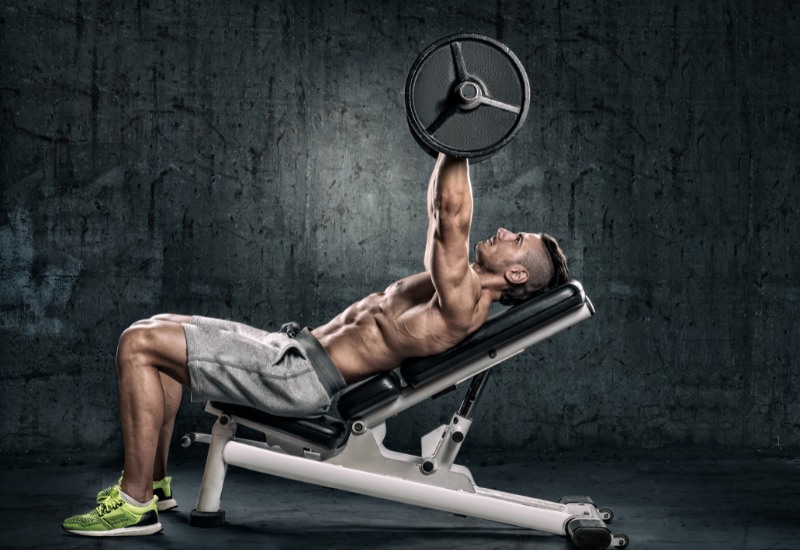
The incline bench press is one of those variations almost everyone has done at some point, but not everyone performs well.
Swapping a flat bench for an incline one seems like a small tweak. It isn’t. Changing the bench angle also changes your shoulder position, the bar path, and how the work is distributed between your chest, delts, and triceps.
The incline bench press is one of the best exercises for upper chest development. It’s also one of the worst-executed. Here’s how I do it, what I almost always correct in the people I train, and how to fit it into your week without your shoulders footing the bill.
And here’s the mistake I see all the time: thinking that the steeper the bench, the more you’re working your upper chest.
That’s not quite how it works.
If your goal is to build strength and muscle, the incline bench press can be a great tool, but you need to know what you’re after, how to execute it, and where to place it in your training.
All three are the same movement: pressing a bar away from your chest. What changes is the angle of your torso, and with it, which part of your chest and shoulders takes on more of the work.
| Variation | Bench angle | Area worked most | Typical load | When I prioritize it |
|---|---|---|---|---|
| Flat bench press | 0° | Chest overall (mainly sternal portion) and triceps | The benchmark | Strength foundation, always |
| Incline press | 30–45° | Clavicular portion (upper chest) and anterior delts | Lower than flat | Lagging upper chest, hypertrophy phases |
| Decline bench press | −15° to −30° | Sternal and costal portion (lower chest) | Similar or slightly higher than flat | Occasional variation, I replace it with parallel bar dips. |
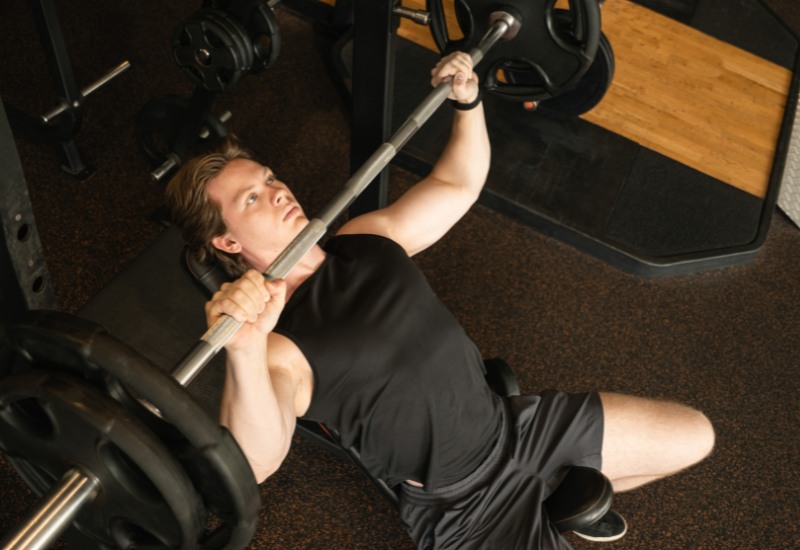
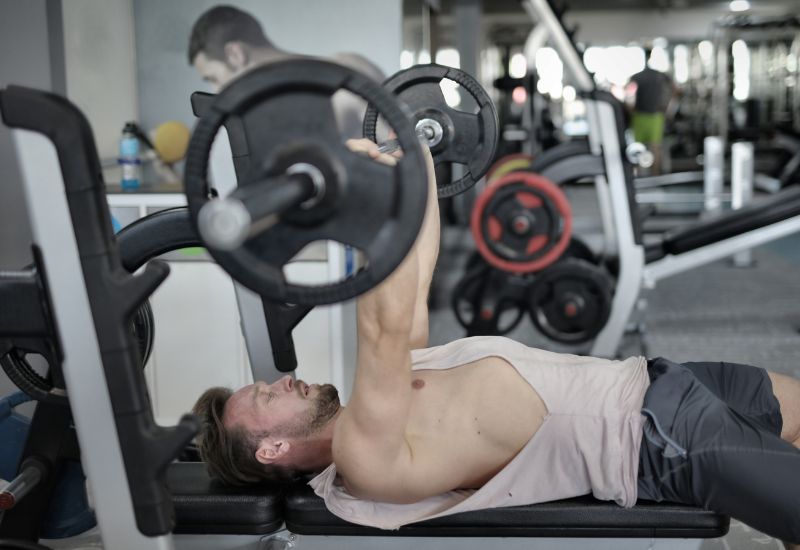
The flat bench is still the foundation. If you haven’t mastered it yet, go over my bench press technique guide before getting into angles. The incline is built on that same technique.
My starting point is 30°. On many adjustable benches, that’s the second or third setting, but every manufacturer is different. If you’re not sure, place your phone on the backrest with an inclinometer app and you’ll know in ten seconds. Up to 45° is still considered incline press. Above that, you’re training MORE shoulder, and if you do that, I’d recommend keeping the weight light.
Find a stable position from which you can produce force.
Your glutes should stay on the bench and your feet firm on the floor. You don’t need to turn this exercise into an impossible pose to find stability.
The idea is for your body to stay still while your arms do the work.
Here’s an example. In this video, I explain the correct position for incline dumbbell press:
Not much changes here compared to flat bench. Your grip width is the same, or a finger narrower, and the reference point is still having your forearms vertical at the bottom. If you’re unsure about this or about wrist position, I explain it in detail in the bench press guide I linked above.
I’ll add just one thing. On the incline, the bar passes right over your face and neck, so using a false grip on the bench press here is an even worse idea than on flat bench. Your thumb should always wrap around the bar.
Scapular positioning is the same as on flat bench: squeezed together, down, and locked in place throughout the set. What changes is where the bar touches.
On flat bench, I always say to lower the bar between your nipple line and the start of your sternum, and not drift toward your collarbones. On incline, since the torso angle changes, the line of push changes too. The bar touches the upper chest, a few fingers below the collarbones. That’s not a contradiction: the correct touch point moves with the bench. What’s still a mistake in any variation is lowering the bar to your neck.
Leg drive in the bench press also works on incline, though it’s harder to find the right position. Sit well back, keep your feet flat and firm, and push into the floor without lifting your glutes off the bench. If you keep sliding down with every rep, the problem is usually the bench, not you.
A bench with an adjustable seat changes the feel a lot. In my review of the Lullax Neo Bench incline bench I explain what to look for before buying one.
You’ll find the general bench press mistakes in the guide. Here I’m focusing on the ones specific to incline, or that cost you more on this variation:
First, you need to know your incline 1RM, not your flat bench 1RM.
You can estimate it with a set of 6 to 15 reps and our bench press 1RM calculator.
As a general guide, most of the people I train move between 70 and 85% of their flat bench on incline. Take it as a reference, not a rule. Some people’s leverages work in their favor, and for others, incline just never clicks.
To improve your incline bench, add a Bilbo progression on incline bench to your routine. If you use my Bilbo Method app, you’ll be able to track your progress and estimate your 1RM.
Here you can see how I do it, with a full incline press tutorial:
If upper chest is your priority, incline goes first in the session, while you’re fresh. If your main goal is boosting your flat bench, incline becomes your second exercise and you cut back the volume a bit.
With two chest sessions a week, one usually starts with flat bench and the other with incline. That split fits well into a weekly strength and muscle training plan.
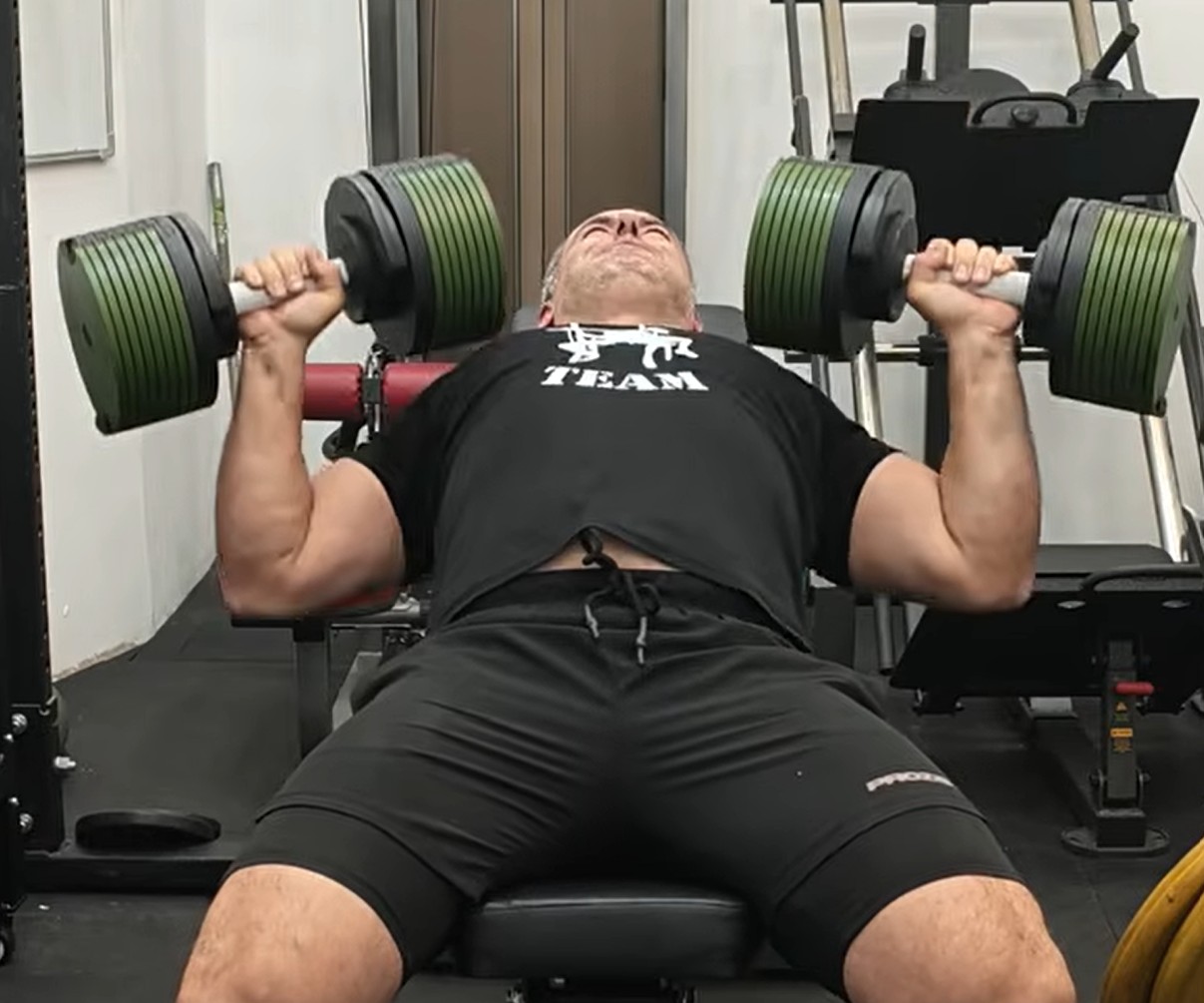
Dumbbells give you room to work angles and ranges of motion that a barbell doesn’t allow. You’ll find more ideas in my dumbbell chest techniques and in the 3 keys to chest training.
‼️ A heads-up: if you do heavy military press the same day, cut volume on one of the two. The anterior delt works in both, and it adds up.
Incline press won’t transform your chest in a month. Done right and with a smart progression, in a few months you will notice it, quite a bit.
👉🏻 In the Bilbo Method Plan, you’ll find three routines tailored to different goals, with the main exercise, accessories, and deloads all organized in the app. It’s the same thing I apply with my own athletes.
Knowing how to do an incline bench press is great, but knowing what weight to use matters just as much. So if every week you’re deciding on the fly which exercises to do, how many sets, and what loads to use, it’s hard to really know if you’re progressing.
That’s why at Bilbo Team we work with a plan that tells you exactly what to train and how to progress.
The Bilbo Method app includes weekly programming, weight and rep tracking, training history, and automatic 1RM estimation, plus technique videos and progress tracking. And you have different training options depending on your goal, including a specific routine prioritizing the bench press.

Expert in strength training and physical tests for civil service candidates. With over 30 years of experience and multiple national and European records, he shares his methods to improve strength, endurance, and performance safely.